Nuneaton-based photographer Connor Richardson talks about art, decay, and the role of graffiti as a creative outlet.
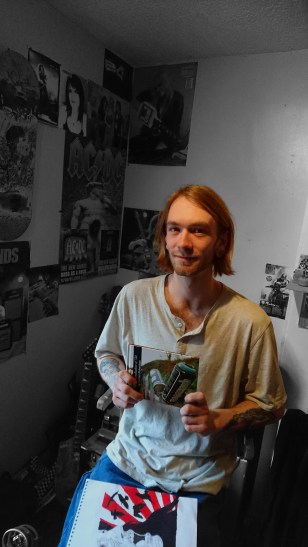
Pictured: Connor Richardson
From the window, you can see the mouth of an industrial estate backing onto the estate. The houses directly outside are flat terraces with flaking walls. This is Nuneaton, a working-class town in Warwickshire that has fallen on hard times.
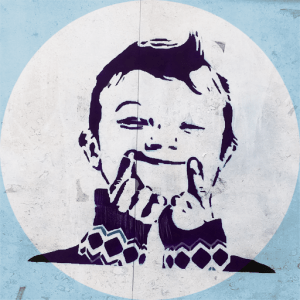
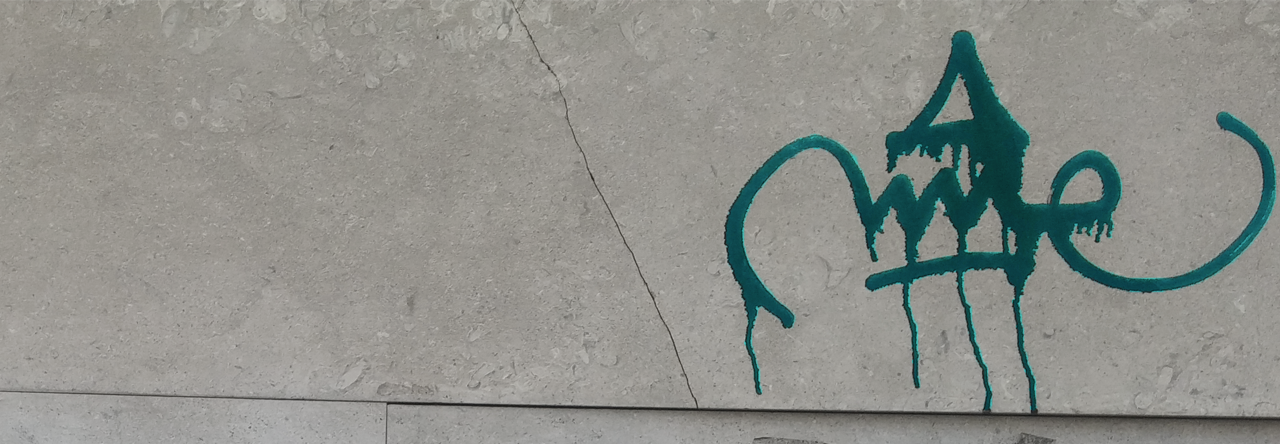
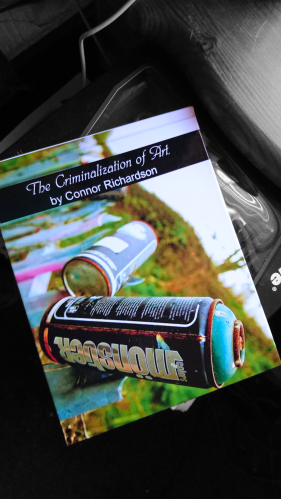
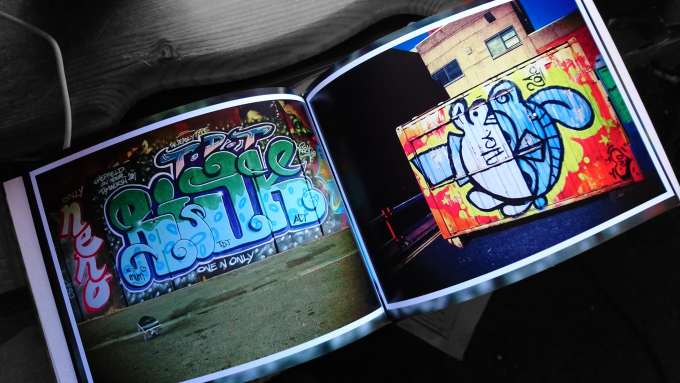
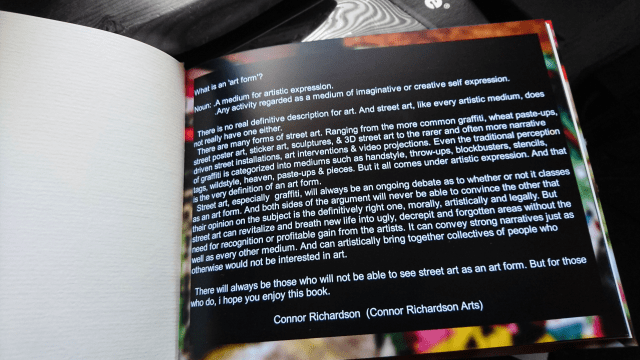
Connor has focussed his energies for his new photobook, The Criminalization of Art, on street art and graffiti in and around Nuneaton. From cover to cover, the book is filled with photos of crumbling walls made brighter with huge, garish designs.
Some of them are highly political- a swallow with a bomb for a head dives towards the ground in one – and others are more traditional ‘tags’, highly stylised personal brands and names in enormous colourful fonts.
Nuneaton is the barely-beating heart of austerity Britain.
The Criminalization of Art
I asked Connor how much being brought up in Nuneaton had influenced his decision to capture street art.
“A good quote that has always stuck with me,” he said, “which I find relevant to street art in this town, is Ernst Fischer: ‘In a decaying society, art, if it is truthful, must also reflect decay’
“Having come from this kind of town, [and recognised that] there is a lot of decay here… that has helped me realise the potential in terms of beauty behind such run-down kinds of scenes.”
Connor hasn’t always been a photographer- he started out drawing and painting, but segued into photography when he got bored of other mediums:
“I had been drawing for so long, I just needed another outlet, another way of expressing myself… with photography being completely different to traditional forms of art just… I took to it, really.”
The inspiration for his style is diverse. Connor cites both the gritty, documentary styles of Sally Mann and the surrealist and painting-like works of Ellen Rogers as influences
“[Ellen Rogers] uses a very interesting colour palette… she uses very old format cameras, which bring a very vintage feel to it. I’ve tried achieve this in some of them photos, by using some very lo-fi cameras, low end toy cameras, stuff like that.”
An example of some of the murals photographed for the book.
His work is in some ways a critical response to the teaching he received in photography from his days at Coventry University:
“Having gone college and university, you’re only ever really exposed to the more traditional forms of art: pretty paintings, pretty photos with pretty people in, and pretty landscapes.
“I’ve always had a disconnect from that. There was nothing I could really relate to. Having come from a town like this… I kind of found the beauty in the decay of it all.”
For Connor, it is important that art is truthful; especially concerning his photography. I asked him if he had done any of the street art featured in his photos himself:
“None of them- I wanted to portray other people’s work. I thought it would be a bit more truthful.
“One of the points I make in the book – and one of the main reasons I like street art – is that it’s done without any recognition, or any forms of profitable gains for the artist.
“It is an expression of their work that they are willing to put up for free, for anybody to view. It’s not like you’re putting out work for the sake of recognition.”
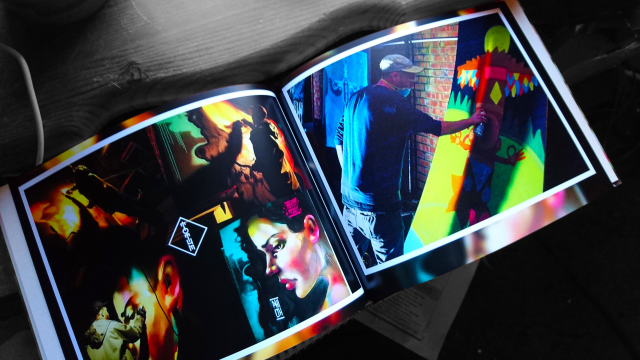
Photos taken from a live street art demonstration at Totum, a Drum and Bass event held at The Railway Tavern, Nuneaton.
The truth in this is undeniable- if street artists owned up to their work, the police would have a field day. It’s easy to forget that the law considers all forms of graffiti and street art as vandalism, and that there are huge costs incurred to local councils in cleaning it up.
“There are some buildings and some locations which I don’t believe should be used as a medium for street art,” Connor said.
“I understand the moral issues around it, but it is going to exist either way… I do think it is important to document them while they last.
“It’s a matter of enjoying it. That’s all street art is. A lot of people will walk past, see a mural, see a piece… and they’re just happy looking at it, walking past it.
“That’s what you need to do with the book as well. Enjoy it.”
An interview with the infamous Don’t Flop battle-rapper, and about his return to the scene
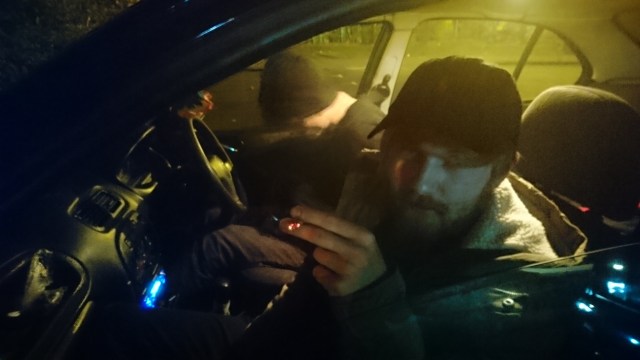
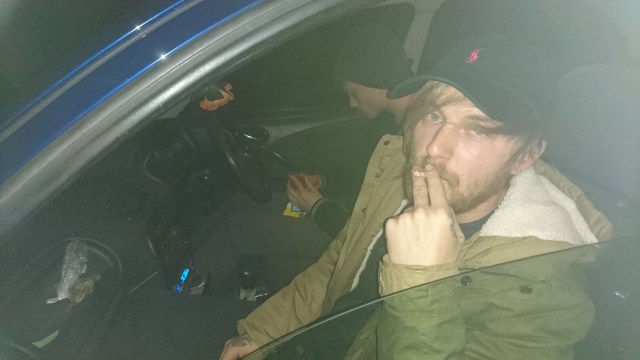
We were in a beaten-up old Rover – the front passenger-side door didn’t open from the inside – parked up next to a KFC on the outskirts of Nuneaton. It was 8pm, and outside was dark and cold.
Until very recently, Callum Clark has lost every battle he has been in. His two-vs-two battle with Chris Leese and Unanymous has been included on a YouTube playlist called ‘Don’t Flop Bodybags’, due to the severity of the put downs he received.
“A lot of people before the battle were like, ‘what you gonna be like’, because Unanymous and Chris Leese are known to get in people’s faces in battles” Callum says, “but it’s one of them where you know nothing’s gonna happen… you see me in the video, I laugh, I’m bobbing along to it, it doesn’t bother me at all.
“It’s like acting, or performing- all I can do is perform back.”
Don’t Flop is a popular battle-rapping competition which is broadcast over YouTube. Battle-rapping, for those not in the know, is a particular kind of a capella improvised rapping. The goal is essentially to berate your opponent into submission, using clever put-downs and high-class lyrical delivery.
To ‘flop’ is to be unable to deliver your next verse without hesitation.
Callum, more commonly known to fans of the battle-rap circuits as CallumBOOM!, has been pitted against some of the biggest names in the scene.
I met up with Callum to find out more about Don’t Flop, and to ask about his reinventing himself as Wobi Tide after a long hiatus.
As I was getting the levels corrected on my equipment, Callum Clark was rolling a joint and talking about his love of comic writers Alan Moore and Neil Gaiman, and also for the late fantasy author Terry Pratchett, renowned for his gentle wit and grasp of absurdity.
I decided to start from the beginning, and ask how it all began. Callum was brought up in Camp Hill – a notoriously deprived area in the north of Nuneaton.
“I could tell you one story of it where it sounds like a quaint little place, and you could look at it from a different point of view and say it was a rough area.
“I went out to swim in lakes, and fuckin’ build rope swings and stuff like that, which sounds like it’s out of a fuckin’ lovely little story… but also people have been killed there, and countless- mopeds, get stolen. That’s the perfect way to explain Camp Hill, stolen mopeds.
“But I enjoyed growing up in Camp Hill, I think it’s an interesting place, definitely.”
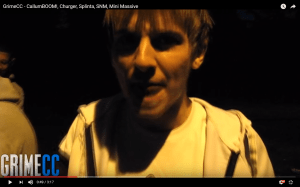
CallumBOOM! on an old GrimeCC cypher. Picture- GrimeCC, YouTube
Callum started out back in 2009 in Nuneaton crew Unknown Outfit- ironically, they were far better known by their YouTube channel name, GrimeCC.
I asked him where the rest of the crew are now.
“Splinta,” – Callum pauses – “that’s one of my oldest mates, best mate of mine called Ricky. He’s getting on with family life now, still writing… when I first started writing it was me and Ricky, when I first started rapping, me and Ricky.
“He weren’t a rapper, but behind the scenes… Matty Chinn, he went on doing some filming for the Paedophile Hunter [Stinson Hunter].”
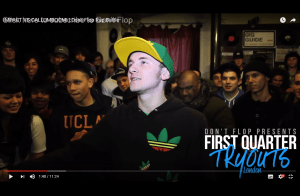
Callum entered his first Don’t Flop battle rap competition in 2012, against then-
Don’t Flop battle against Impact. Picture- Don’t Flop, YouTube
newcomer Impact – “Big up Impact, he’s gone on to do good, big up Impact”.
Impact quickly took to the offensive and delivered some brutal bars.
“When it comes to raps, mine are like lightning strikes and thunder claps, entire galaxies are rent asunder when my lungs contract, you’ve awoke Cthulhu from his slumber, twat!”
CallumBOOM!, for want of a better word, ‘flopped’.
“Impact, you’ve never wrote a quick rap – you sound too si- ah, fuck.”
He accepts this post-mortem entirely- “Oh, I completely fucked up, 110%… I really didn’t take it as seriously as it was, I didn’t realise what Don’t Flop was, I didn’t understand how to write for an a capella rap battle… it is very, very different to writing stuff on beat.”
“My first round, the one where I fucked up the most, I wrote on the way to the battle… as I said, I just didn’t take the battle seriously, not in an ‘Ah, I think I’m amazing, dickhead’ kind of way, just… just that I was kind of a fucking idiot…
“After that, I got smoked, and that’s when I was like, right, I’ve got to do another battle now, to prove myself. I can’t let that be my last one.”
He then went on to do a few battles on rival YouTube channel RedJSD (due to a “lack of a call” for him to come back on Don’t Flop). One was against rapper Rogue– he maintains that “Out of all the battles I’ve done, I fuckin’ won that battle” – although almost immediately afterwards, he remands himself.
“I didn’t though, did I. They [the judges] voted against me, so I’m incorrect to say I won.”
In 2013, CallumBOOM! made his return to Don’t Flop. He teamed up with Two Can, first to go against rappers Pedro and Bamalam, before he had his most infamous battle against battle-rapping heavyweights Unanymous and Chris Leese.
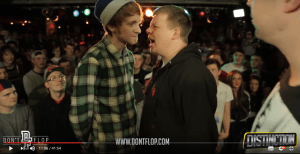
Unanymous getting up close and personal. Picture – Don’t Flop, YouTube
Both Unanymous and Chris Leese later went on to individually contest Don’t Flop champion Tony D in a title battle, to become the champion of Don’t Flop. Callum described the battle with Tony D and Chris Leese as a “close one… some say that Chris Leese possibly beat Tony D then, but the judges went the other way.
“I really did go against two of the top people in Don’t Flop at the time, to see their quality of writing against mine, I was kind of put off looking at theirs and thinking ‘Jesus Christ, that’s quality’, and mine’s just a bit…” Callum blew a raspberry.
In battle rapping, very little is off-limits in terms of content. In CallumBOOM! and Two Can vs Unanymous and Chris Leese, the following lyric set, barked in tandem by the two competitors, demonstrated this rule completely:
Unanymous: “You’re looking a little stressed Callum…
Chris Leese: “We got a call from your ex, Callum…
Unanymous: “We found out you got placed under arrest Callum….
Chris Leese: “Because of the innocent little girl who wouldn’t give you any SEX, Callum!”
When I asked Callum about this, he said “That, is a good angle, you know? And they presented it well. It’s not true, at all, but… with the momentum they had… it was real good, they were a real good team together.”
He told me about how the bar originated from a real situation, in which a girl who was “a bit crazy for me”, accused him of “oral rape”. He was taken in for questioning, and the police swabbed his room for evidence. Nothing was found and the case was thrown out.
“It’s just crazy to me… nothing, nothing happened at all, and it all got proved that nothing happened, and it’s one of them sort of- maybe something should have happened to her for accusing me, because that’s a bit fucked up.
“Someone from round here who heard that, they were a big fan of Unanymous [told them]. So they said ‘You got arrested for raping this little girl’, when this girl who said this was older than me. Do you know what I mean?
But you know, it was a good angle, it was performed well, and fair-play.”
After this battle, CallumBOOM! might as well have walked into the sea- he released no new tracks, no new battles, nothing. In fact, CallumBOOM! wouldn’t ever appear again.
On the 19th October 2015, exactly one year prior to this interview, Callum Clark returned under the new name of Wobi Tide (after something his teachers used to say, “Woe betide the boy who stays out late”), with his new track Cedar.
“I hadn’t wrote for 3 years, just cause… I dunno, life was just a bit fuckin’ hectic, and even though people draw from things like that, I just didn’t have motivation at all, I was just a bit like… fuckin’, what’s the point, kind of thing.
“And then, I just, I dunno, got inspired again one time… I was just like yeah, I want to do it again, sort of thing.
“It [Cedar] was bars I’d previously wrote on a different beat, but didn’t record, so I was just like ‘Oh I’ll do it on this beat’… I found another beat, and it just gave it another push for me.”
“I’m currently writing at the minute, it’s just building a buzz at the minute, I might release a track every now and then but before I release a mixtape or anything like that… I want to release something that a fair few people will actually get and listen to.
“[For now] I’m just going to be doing freestyles, battles… I’d like to be a big battler, obviously, to not want to be number one would be stupid, obviously I’m not fuckin’ nowhere near any of that, but I’d like to do that… but I’d like to do music as well.”
Concerning his next Don’t Flop appearance:
“[I have now] won my first battle, before this, I’ve only won half a round [laughs].
“On my fuckin’ try-out bruv, geezer called Pete Cashmore – big up him, he’s someone who’s always reached out and been lovely, sound geezer he is- he fuckin’ gave me half a round on my first battle, and that’s the only vote I’ve had before.
“But yeah, I won this battle, 2-1 I think, one guy didn’t vote for me. Fuckin’ idiot [laughs]”.
Additional: This is the first non-health related item on this blog. As mentioned in the previous post, I am going to start broadening my scope with this blog’s content, in order to accommodate and promote some of the other journalism that I do.
Cut For Stone’s focus will still be primarily on health. Consider this an experimental phase, to see what works. Please let me know what you think, and leave comments below.
The BMA has issued a warning that students from deprived areas in the country may be ‘held back from a career in medicine’, because most medical schools require a GCSE in Triple Science in order to apply. This award was found not to be offered as often in deprived areas, and when it is offered, lower numbers of students applied for it. The BMA have called for all secondary schools to offer Triple Science as a course, for medical schools to consider contextual data (like details about the applicant’s school or where they live) in their admissions, and also for outreach schemes between medical schools and secondary schools to spot possible talent early on.
The Beveridge Report was published in 1942, and laid the basis of the push for social welfare and greater social mobility in post-war Britain. It proposed support ‘from cradle to grave’. Source: Wikipedia
I must admit, I don’t remember my own Triple Science classes being that under-subscribed. I went to school in the Warwickshire town of Nuneaton. Nine areas in Nuneaton are featured in the 10% most deprived communities in the country, according to a report from Warwickshire Observatory from 24th March, 2015. For clarification, I don’t live in any of those nine areas, and I would not refer to myself as deprived by any stretch; however many of the people from my school came from these areas. Students at Higham Lane School (which I attended 2005-2010) were- and still are, as far as I know- offered the chance to do the Triple Science GCSE. Several people I know from school have gone on to medical schools and are currently in training to be doctors, although I would estimate that most of these people did come from middle-class households.
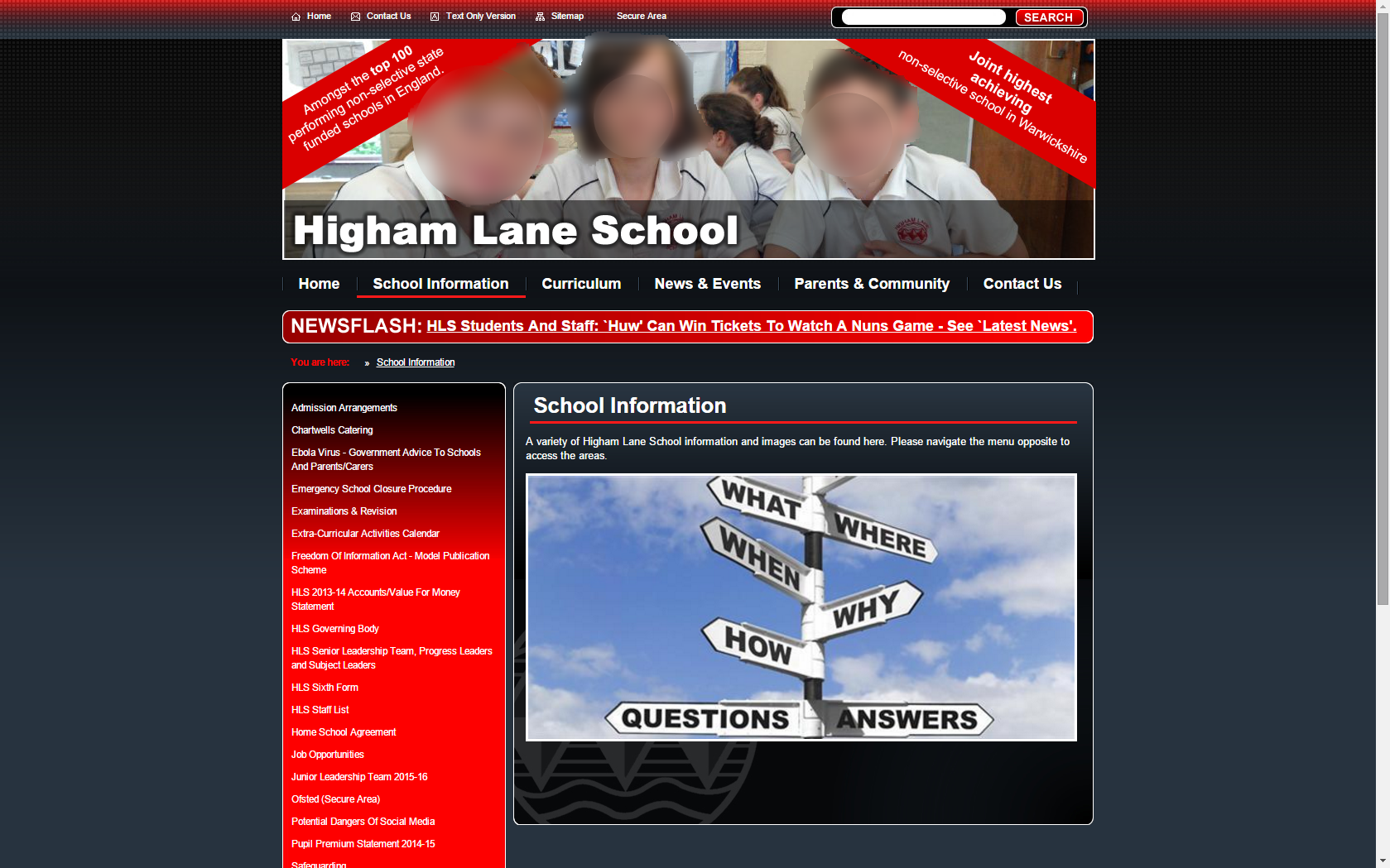
Higham Lane School’s website says that they are amongst the top 100 performing non-selective state schools in the UK. Source: Higham Lane School
That disclaimer aside, it is important to remember that one anecdotal case does not a rule make. The BMA’s report, ‘The Right Mix: how the medical profession is diversifying its workforce’, found that in the areas of Hull and Newcastle, less than 65% of schools offer the Triple Science course. In Newcastle, only around one in five students were taking the course (18%); in Hull, this was significantly lower, at around one in ten (11.4%). Compare this to Rutland, an area significantly more well-off than those mentioned, in which over a third of students (36.2%) study the subject, which is taught at all schools in the area. 80% of applicants to medical qualifications in the UK come from 20% of the schools, so one must cross their fingers and hope that the next Sir Alexander Fleming hasn’t had the misfortune to be born in Hull (sorry, Hull).
A possible problem is the perception of medical schools by people of lower socioeconomic class. A 2004 study published in the BMJ and co-authored by Professor Trisha Greenhalgh found that opinions of medical school didn’t change much when considered by gender (over half of medical students in 2013 were female) or by ethnicity. Class on the other hand had a significant effect:
Pupils from lower socioeconomic groups held stereotyped and superficial perceptions of doctors, saw medical school as culturally alien and geared towards “posh” students, and greatly underestimated their own chances of gaining a place and staying the course. […] Pupils from affluent backgrounds saw medicine as one of a menu of challenging career options with intrinsic rewards[.]
The study also found that while both groups were concerned about the costs of study, only the poorer pupils saw it as a factor of constraint.
There is a clear and obvious problem in the country today with the perception of the medical profession. With the current crises of under-staffing in hospitals across the country, it is also a potential time-bomb for the NHS. The recent furore over junior doctors and their salary cuts, along with Jeremy Hunt’s push for an ill-planned 24/7 NHS (as many infuriated medical staff have already pointed out, doctors already work weekends) will likely turn people off the profession, especially potential future doctors from lower socioeconomic backgrounds who, even back in 2004 according to the Greenhalgh study, already considered the profession to require ‘prohibitive personal sacrifices’.
A push needs to be made to attract as many people to the profession as possible from all backgrounds. An anti-propaganda campaign to the Tories’ poisonous rhetoric and restrictive policies towards the poorer community’s ability to study needs to be orchestrated. As well as this (as the BMA rightly says), there needs to be a effort to make these opportunities available and viable for everyone. This involves being outraged by the fact that many students can no longer afford their own rent while studying; this includes providing as much support for reforming the student loan system as possible; this means providing an information campaign directed at pupils in deprived areas to educate them that careers in medicine are in reach, that they are attainable with hard work and dedication, and that the rewards from such endeavours stretch far wider than just financial incentives.
It’s saving lives, at the end of the day, in the most literal sense.

 Cut for Stone