

The BMA has issued new guidance to GPs requiring them to provide free consultations and routine care to non-UK residents, including tourists. This comes at a time when six out of ten GPs are considering retirement due to ‘workload pressures’, and a third are ‘actively planning for this decision’, according to a BMA press briefing from July 2014.
The BMA claims that the guidance has ‘remained the same as previously’ but ‘it has been re-worded and re-formatted for clarity.’ PULSE have also quoted a spokesperson as saying that entitlement to healthcare for non-UK residents has ‘long been an area of confusion for GPs, largely due to the absence of clear guidance from the [Department of Health] and NHS England’.
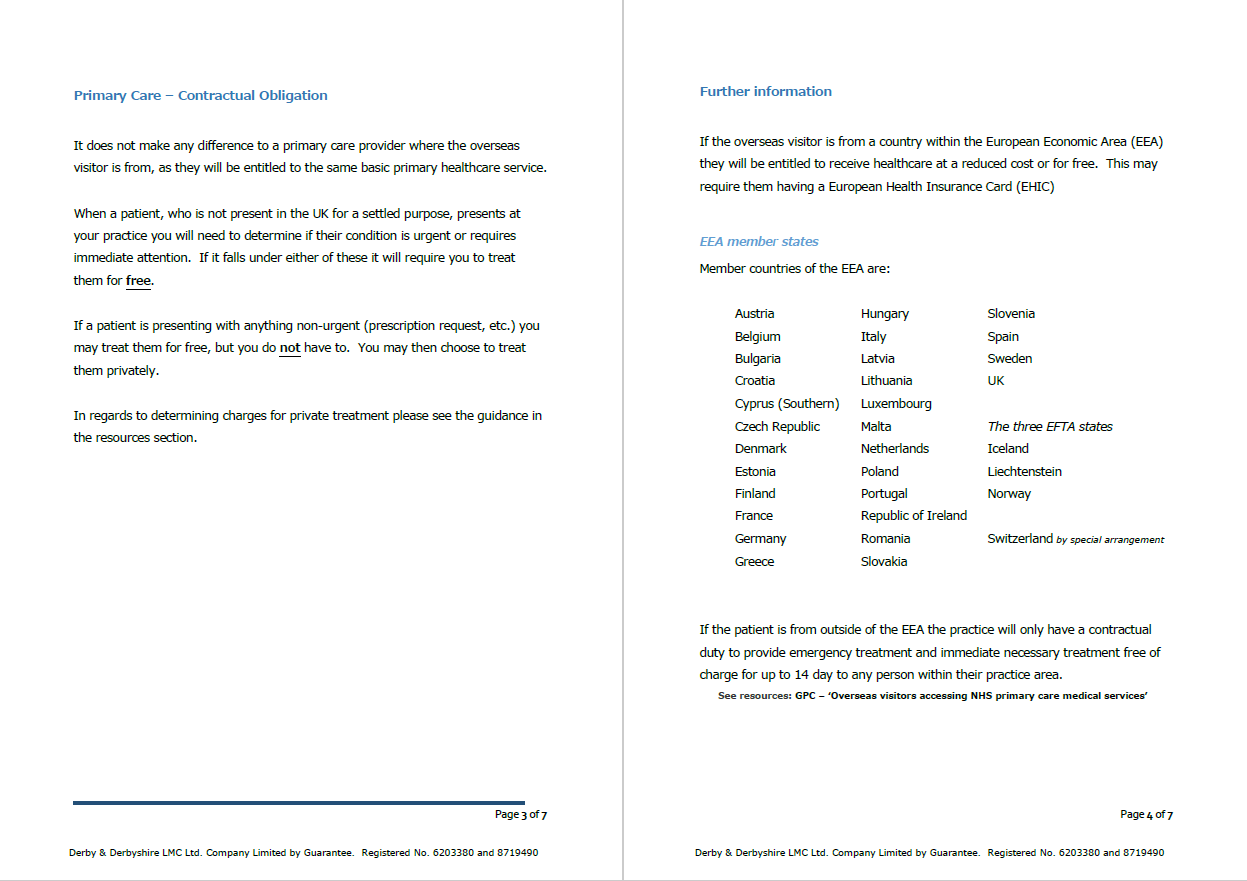
Up until now, the general consensus among GPs seems to have been that it was up to the discretion of the practice to decide whether or not to charge for treatment of anything non-urgent to overseas visitors. A Derby & Derbyshire LMC guidance pamphlet on ‘Overseas Visitors’ from August 2014 also makes clear that any patient from outside of the EEA (European Economic Area) was only entitled to emergency treatment and immediate necessary treatment free of charge for up to 14 days. Under the new guidance however, anyone, ‘regardless of nationality and residential status may register and consult with a GP without charge’.
The rewording of the guidelines has, despite the BMA’s assurances, completely changed their practical effect. One of the most worrying potential effects is to increase health tourism to the UK. This could potentially lead to yet another drain on the NHS’s dwindling financial resources, as people from outside of the EEA will effectively be paying nothing in the way of taxes or health insurance for the services provided. There are already procedures in effect to make sure that anyone in urgent need of healthcare, regardless of where they are from, will be able to get it through the NHS.
The Department of Health have taken something of a Schrödinger’s Cat approach to this. In April this year they launched a scheme in which patients without an EHIC (European Health Insurance Card) will be charged 150% of tariff pricing for secondary care in an effort to combat health tourism and retrieve £500m per year by 2017.
In response to this particular issue however, they have said that ‘international visitors are welcome to use the NHS provided they pay for it- just as families in the UK do through their taxes’, while also saying that they have a ‘long standing commitment not to charge patients directly for GP or nurse consultations’. The reason being, according to a Department of Health spokesperson, that keeping these services free is in the public interest as someone with a serious infectious illness like TB or Ebola might be ‘deterred from seeking treatment because they fear being charged’.
One can’t help but think that if a patient had Ebola (a horrific disease infamous for its tendency to cause bleeding from every orifice) that it would classify as emergency care requiring urgent treatment, and the patient probably wouldn’t be thinking of calmly booking an appointment with their GP, nor would they be tremendously worried about any sort of ‘charges’.
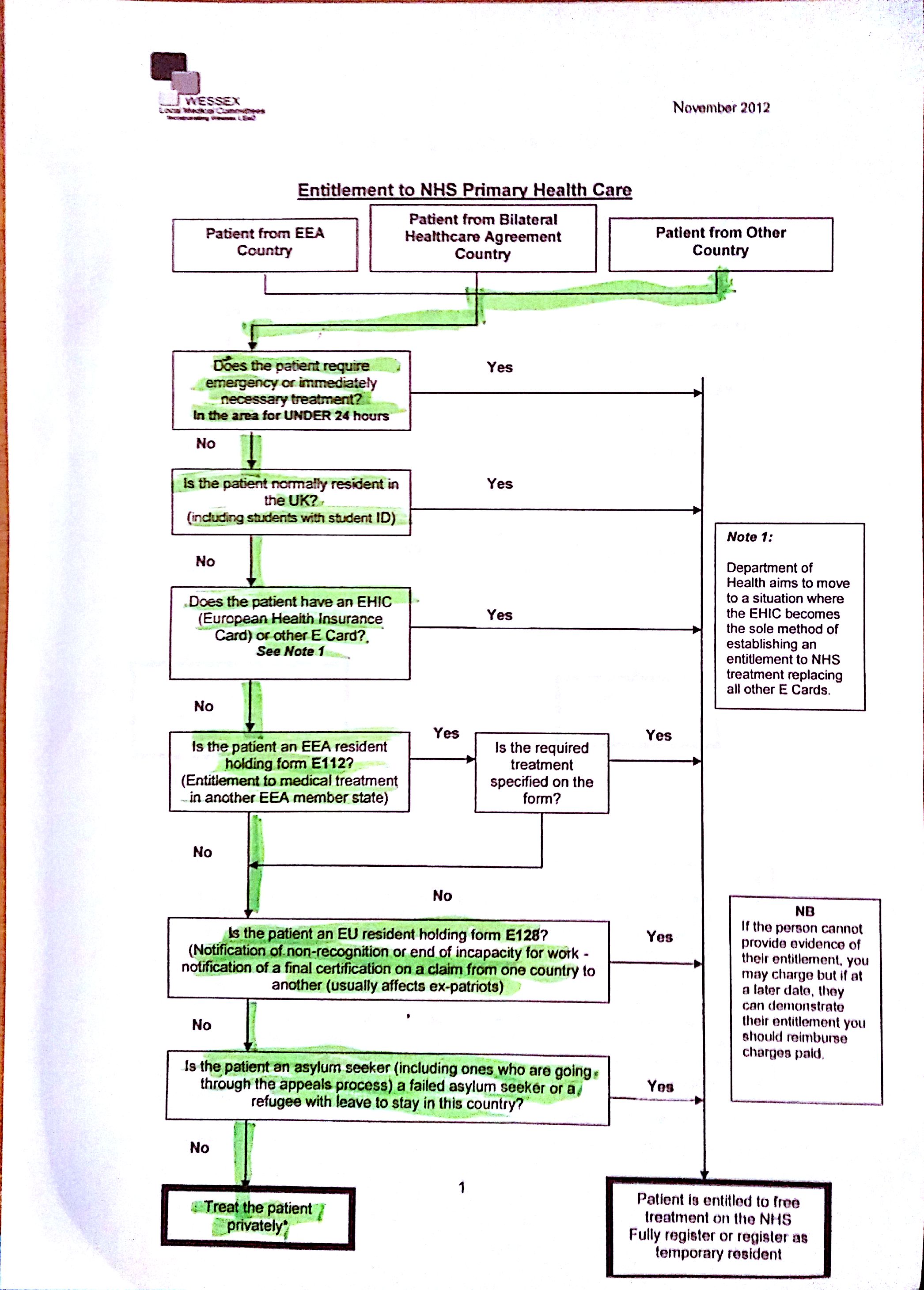
It should be noted that there are procedures in place to protect the vulnerable in the UK; asylum seekers and refugees are already entitled to treatment. Another overseas visitors guidance document produced by the GPC from May 2005 said that in the event that a patient is not eligible for free treatment and is unable to pay privately, they should be referred to The Refugee Council for assistance. It also notes a resolution passed at the LMC conference in 2004 ‘which opposed proposals to deny failed asylum seekers free primary medical services’.
It seems somewhat apparent, then, that all the bases for vulnerable non-UK and -EU residents seeking NHS treatment were already covered. This makes the new reinterpretations of the guidelines all the more perplexing.
Already, the waiting times to see a GP have risen to 10 days, and are expected to rise to two weeks by next year. GP practices are facing a severe recruitment crisis, leaving GPs overworked and overstressed. Encouraging health tourists with the lure of free consultations will hardly help the matter; it doesn’t take a genius to figure out that a stressed doctor trying to get through a mountain of work is more likely to make mistakes which would be more costly to the general public than some nebulous fear peddled by the Department of Health about “Trojan horse” non-UK residents.
The NHS is not a charity. It is a taxpayer-funded health service. The money to treat patients doesn’t condense from the air like droplets in a glass bottle; it has to be trickled in from the general public and (theoretically at least) responsibly distributed to where it is needed. EEA residents also fund our NHS when they need treatment, through medical insurance cards and their own taxpayer’s money. In addition to this, a survey conducted by PULSE shows that 77% of GPs support the government’s efforts to stop health tourism by charging foreign visitors for accessing primary care.
These new guidelines leave the NHS wide open to exploitation from health tourists seeking a cheap diagnosis and course of treatment. Dr Zishyan Syed, a GP in Kent, has said:
It is a sad reality but there is abuse of the NHS by foreign visitors. It is only fair that they pay upfront if they are not entitled to free care on the NHS. The NHS is in trouble and it is only right that the Government stops anyone from taking advantage of a system that is already under immense pressure.
Source: PULSE
It would be wonderful if the NHS could treat everyone in the world for free, but the realpolitik of the situation is that they cannot afford to. At this time, it is somewhat reckless for the BMA to reinterpret the guidelines in this way; although they are just following Government regulation. It is more damning that this has been done in the name of the Department of Health
Amendments: Title and other elements have been amended to more accurately reflect the story.
NHS England have since made contact. Their spokesperson has said:
There’s various things going on that have perhaps caused a bit of confusion. DH are looking into guidance around charging people from abroad.
All that we’re doing is just reconfirming the existing guidance around registration for patients. There has been a bit of confusion in some practices about asking for documents to prove that they were local or ordinarily resident, which isn’t required for primary care.
So we’re just reiterating new guidance, there’s nothing new in there.
There is a lot of confusion with word also going around that DH is considering charging for secondary or hospital treatment.
Source: NHS England

